
Rising Operational Cost
Unmonitored cloud spend, orphaned resources, and no tagging strategy quietly turn a working platform into a runaway bill. Learn to find and fix the waste before finance does.
This cloud FinOps certification is designed for cloud engineers and platform teams who need to bring cost accountability into their infrastructure. Through hands-on labs, you'll learn cloud cost tagging, budget forecasting, anomaly detection, and cross-team governance, the practical skills behind controlling AWS, Azure, and GCP spend at scale.







 New Company
FinOps matters now because cloud cost rarely spirals from one bad decision, it spirals from no one owning it. This cloud FinOps training exists to close that gap: giving teams the visibility, forecasting, and governance to make cost a shared, proactive practice instead of a monthly surprise.
Unmonitored cloud spend, orphaned resources, and no tagging strategy quietly turn a working platform into a runaway bill. Learn to find and fix the waste before finance does.
Scaling without cost guardrails leads to surprise invoices and reactive firefighting. Build the forecasting and alerting systems that catch overspend before it happens.
Manual cost reviews and siloed finance/engineering teams turn every budget conversation into a bottleneck. Use repeatable FinOps practices to make cost part of the engineering workflow, not a monthly surprise.
A practical Cloud FinOps course for professionals who want to improve cost visibility, accountability, forecasting, and optimization across AWS, Azure, and Google Cloud.
Includes the detailed learning path, module structure and technical prerequisites.
You'll build what a real cloud FinOps certification should actually teach: a cost-governance workflow, an anomaly-detection guardrail layer, and a full dashboard showing forecasted vs. actual spend.
Create an allocation model, tagging policy, budget thresholds, and reporting workflow that keeps cloud spend visible and accountable.
Build a 90-day forecast, define budget thresholds, and document a repeatable response for unexpected cloud cost changes.
Combine allocation, forecasting, anomaly investigation, and optimization actions in a multi-cloud dashboard and 90-day implementation plan.
Examples of portfolio-ready projects learners can complete in a FinOps course using simulated cloud billing and usage data. Each project produces practical evidence that can be explained in an interview or professional portfolio.

Normalize simulated AWS, Azure, and Google Cloud billing data into one decision-ready cost model. Define rules for tagged, untagged, and shared costs; map spend to teams, products, and environments; measure allocation coverage; identify the services driving month-over-month changes; and present a clear showback view with recommendations for improving ownership and tagging quality. Portfolio evidence: • Normalized multi-cloud cost dataset • Cost allocation and shared-cost methodology • Tagging and account hierarchy policy • Allocation coverage and unallocated-spend analysis • Team/product showback report • Executive dashboard with observations and recommendations
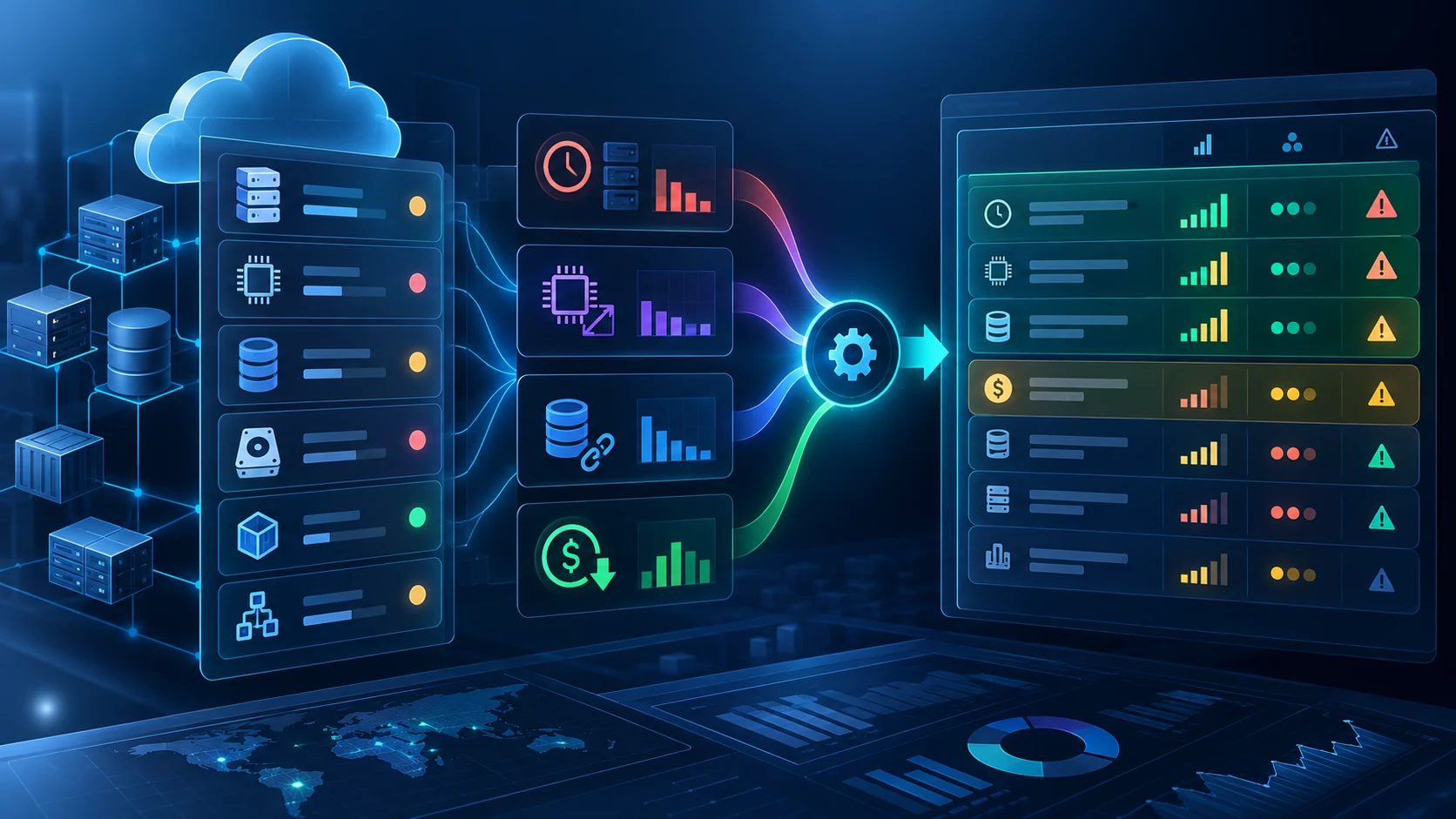
Analyze simulated resource inventory, utilization, and billing data to identify idle compute, unattached storage, oversized services, and avoidable network or database spend. Validate each opportunity against operational requirements, document assumptions, estimate the monthly impact, score recommendations by value, effort, and service risk, and assign an accountable owner and validation step. Portfolio evidence: • Cloud waste inventory with supporting evidence • Rightsizing and cleanup recommendations • Estimated monthly impact with assumptions • Impact–effort–risk prioritization matrix • Owner, due date and validation tracker • Before/after cost model and executive summary

Build a 90-day driver-based cloud forecast using simulated historical spend, planned growth, seasonality, and known project changes. Define warning and critical budget thresholds, investigate a realistic cost spike across service, account, team, region, and usage dimensions, and document the root cause, containment action, accountable owner, and preventive control. Portfolio evidence: • 90-day forecast with documented assumptions • Forecast-versus-actual variance analysis • Budget thresholds and escalation rules • Anomaly investigation worksheet • Root-cause and financial-impact summary • Response runbook with ownership and prevention actions
Track your mastery seamlessly as you progress through each stage.
Review the key certification exam information before you begin your preparation.
Get support while you complete this cloud FinOps training, exchange ideas with peers, and keep moving when a practical activity gets difficult.
“Combine AWS, Azure, and Google Cloud cost data into one governance view. Allocate shared spend, measure unallocated cost, create a 90-day forecast, investigate an unexpected cost spike, and prioritize optimization opportunities in a portfolio-ready dashboard and implementation plan.”
Cost Allocation • Forecasting • Anomaly Response • Optimization Backlog • Executive Reporting
Verified learner stories will appear here after identity, project evidence, outcome, and publishing permission are confirmed.
Use practical templates that reinforce the course projects and help you build portfolio-ready FinOps deliverables.
A structured worksheet for defining ownership, shared-cost rules, allocation coverage, and showback reporting. (Included Value)
Templates for documenting forecast assumptions, budget thresholds, anomaly investigation, ownership, and preventive actions. (Included Value)
A prioritization template and presentation guide for turning cost findings into an engineering-ready action plan. (Included Value)
Study every module free. Upgrade when you're ready to practise, prove your skills and get certified.
Perfect for getting started with the free introduction and first learning module.
The complete Cloud FinOps learning, lab, capstone, and certification path.
Get engineering, finance and leadership working from the same cost playbook, with group pricing, progress tracking and one point of contact for enrollment.
Every module is free to study. The Professional Plan adds the practice, proof and certification that employers look for.
If the premium learning experience is not right for you, request a refund within 30 days according to the enrollment terms.
Everything you need to know before enrolling.